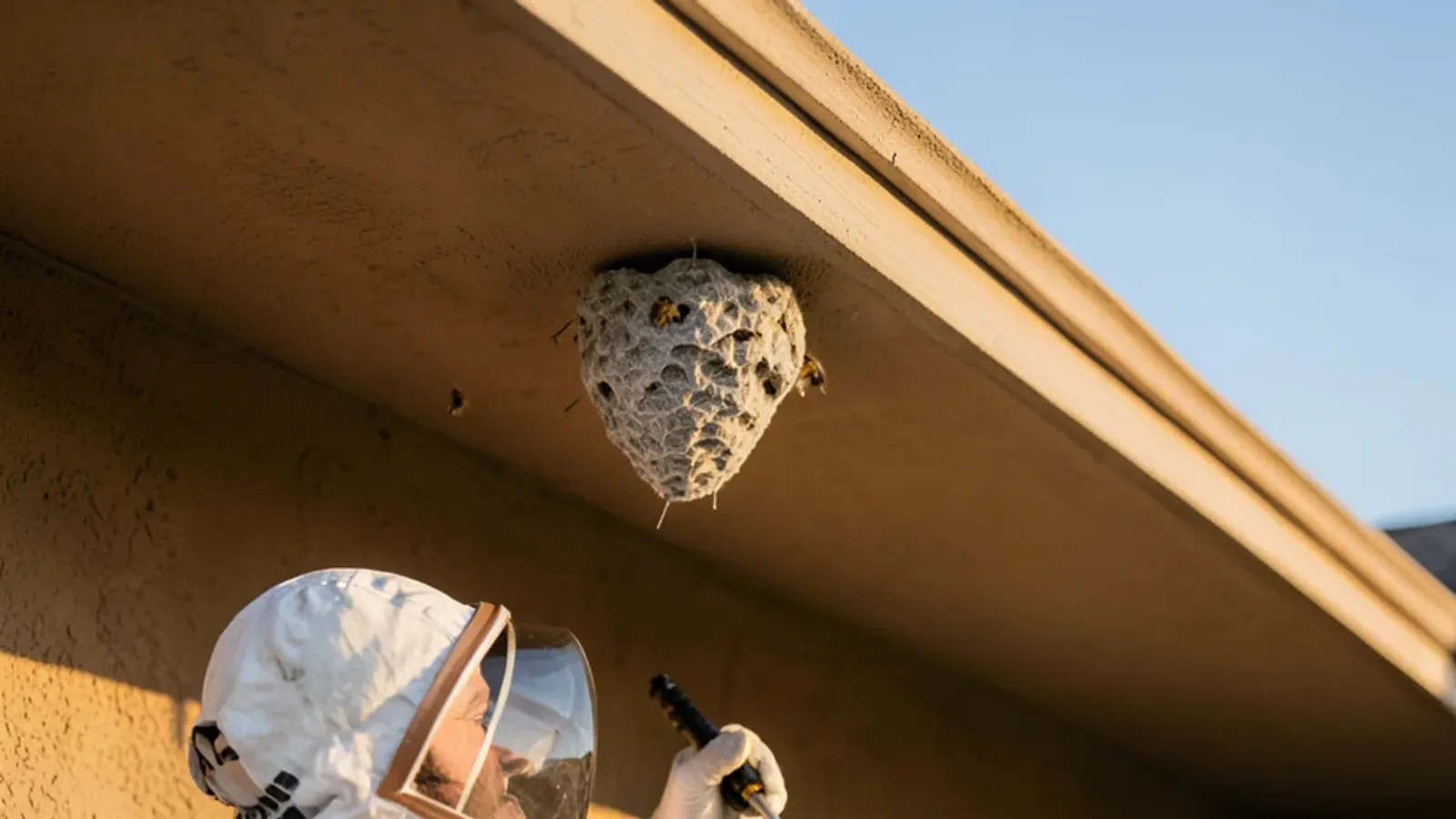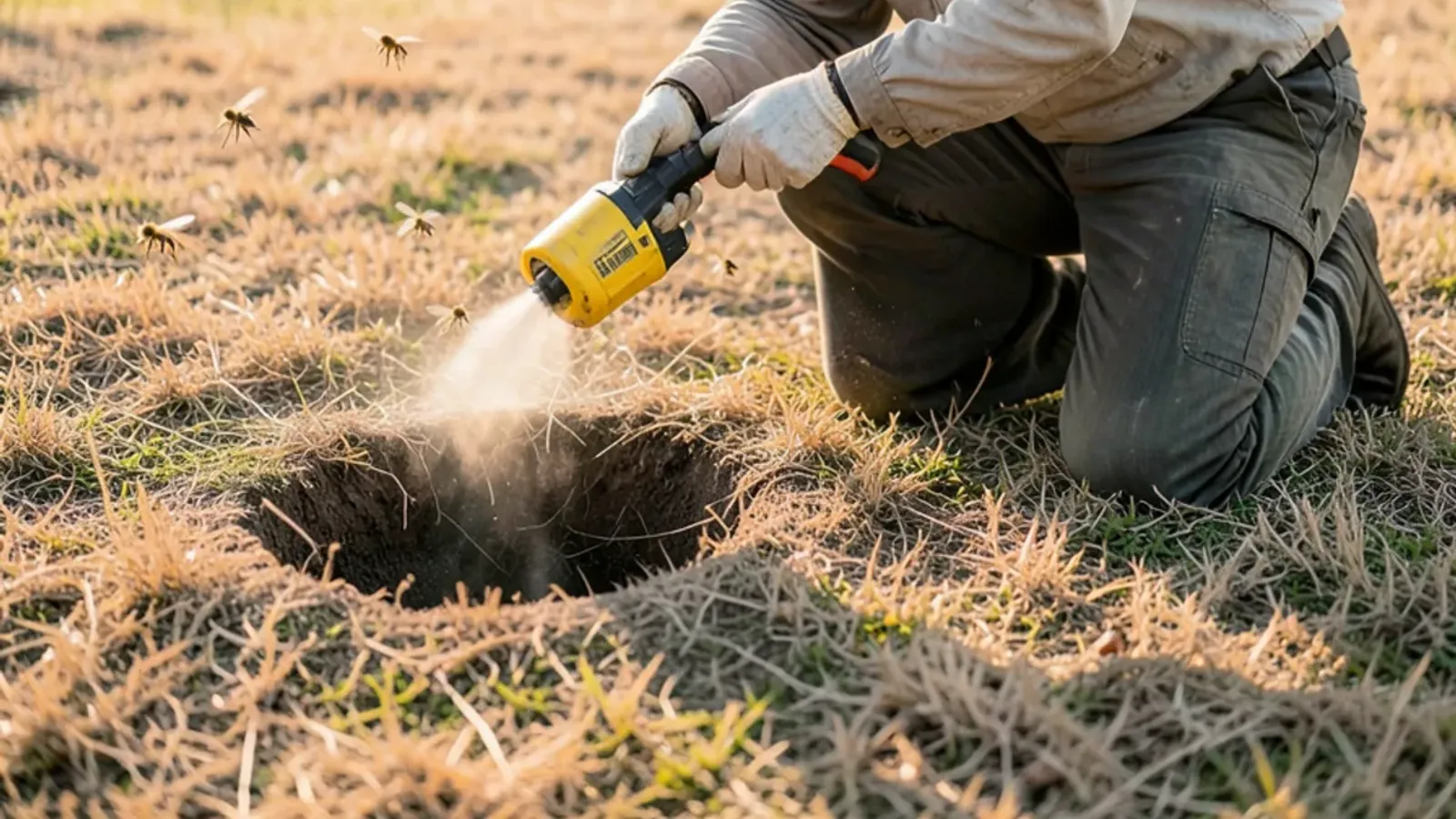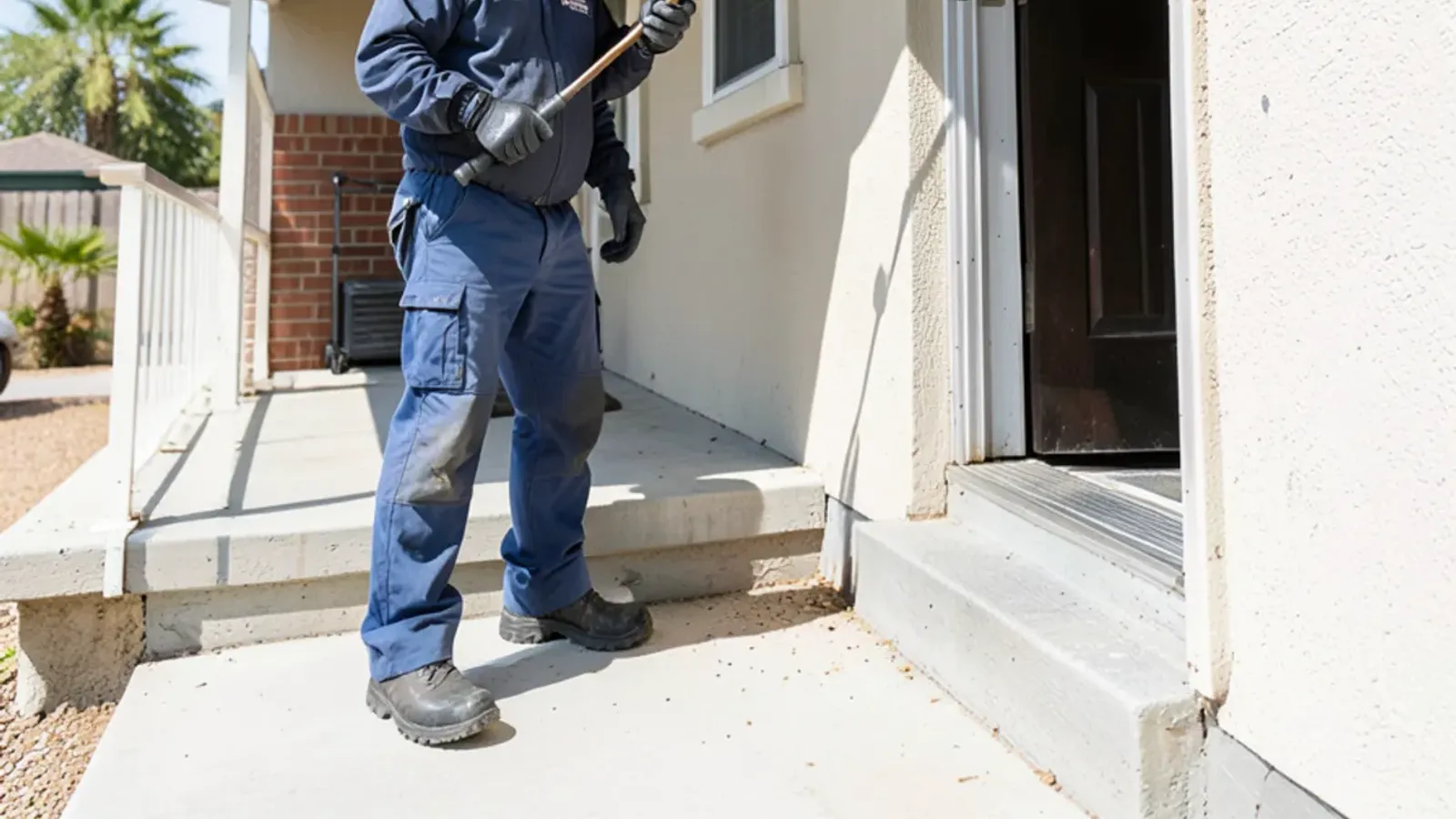
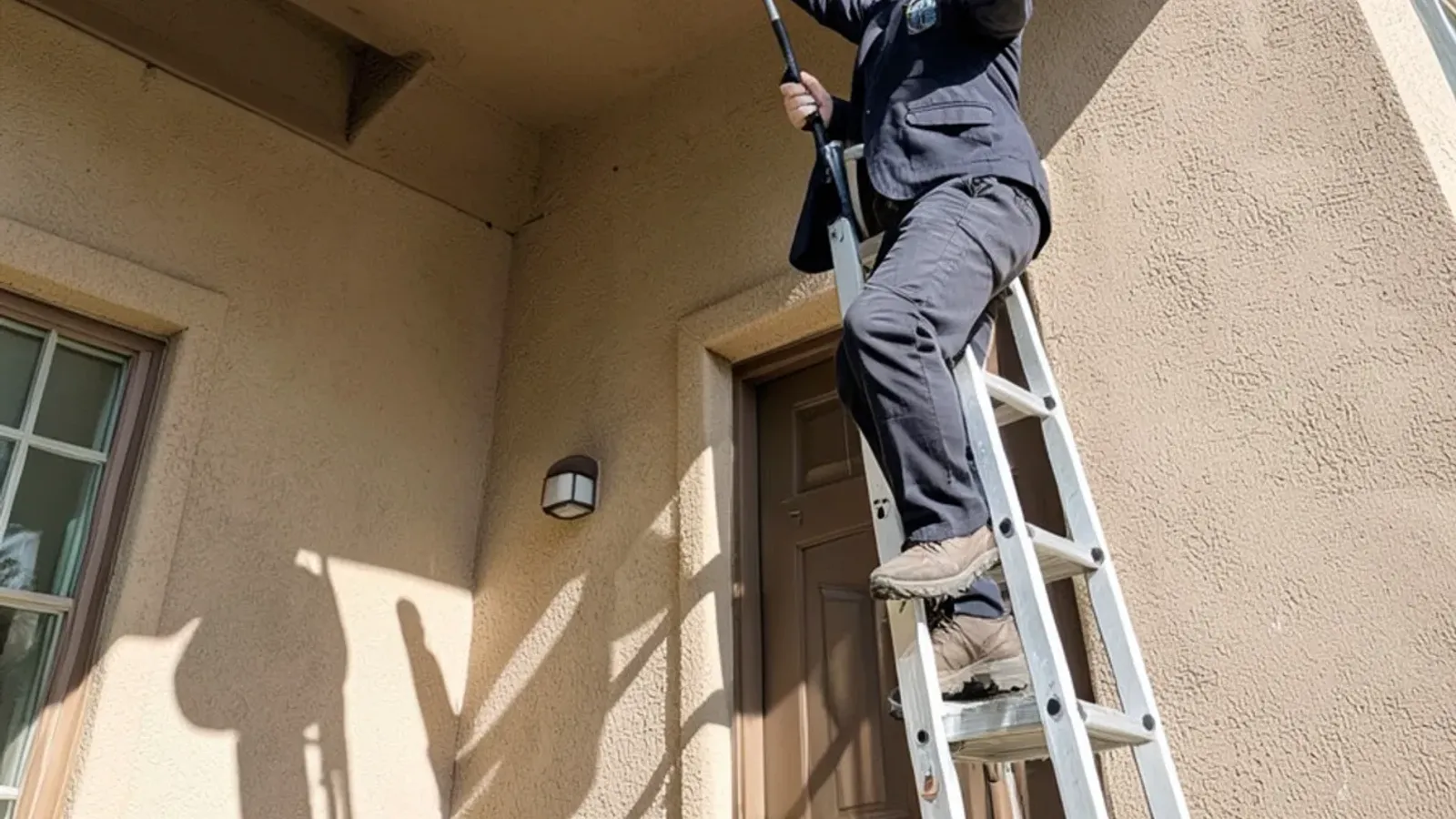
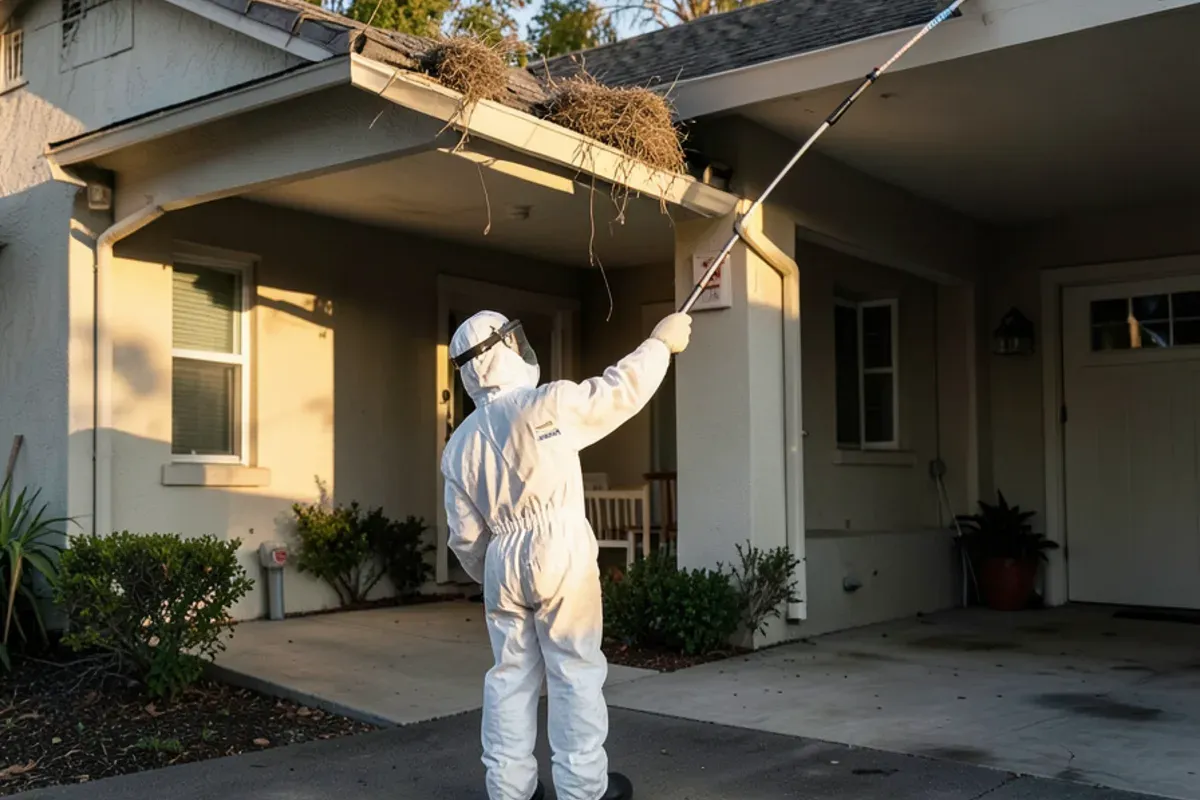
Wasp and hornet nest removal in San Jose means treating the colony first, then taking down the nest — knocking a nest down with live wasps inside only scatters an angry colony. Budget Pest Control treats paper wasp and hornet nests on eaves, in wall voids and in sheds, safely and often the same day when a nest sits over a doorway.
What a wasp & hornet nest removal job includes
- Location and identification of the wasp or hornet nest
- Treatment of the colony at the nest before removal
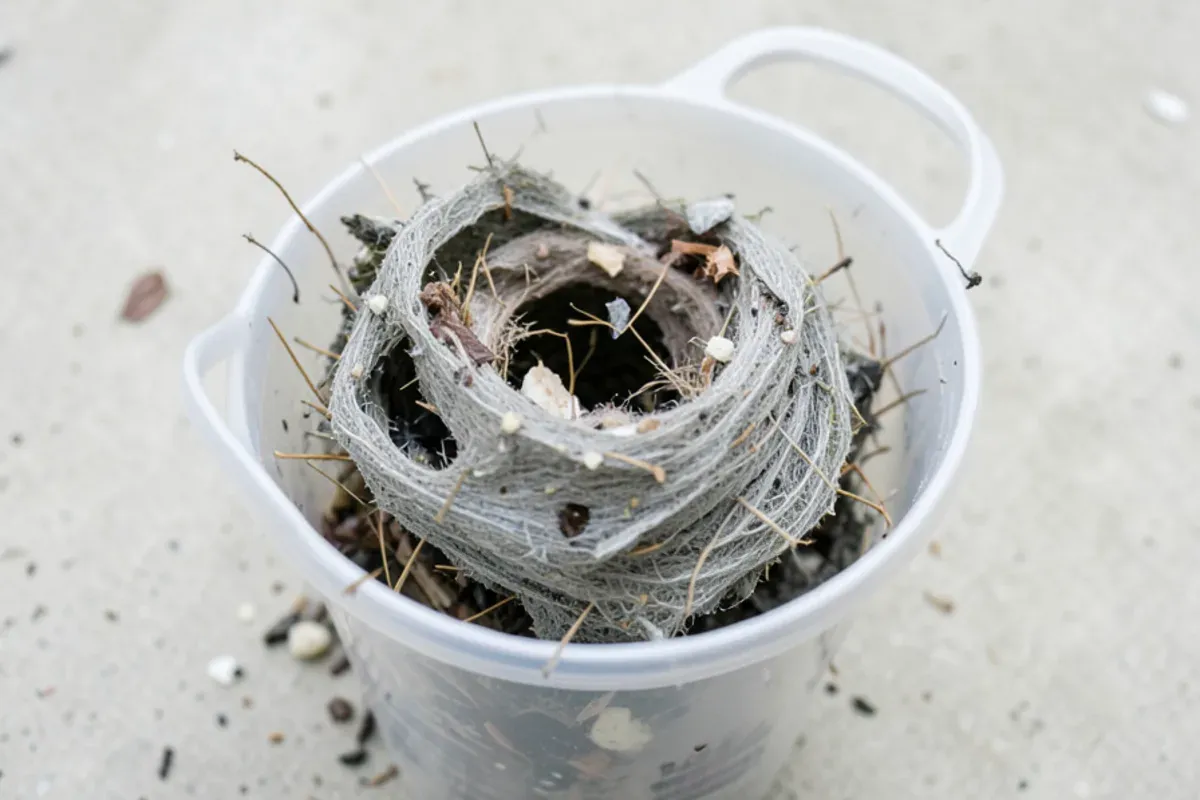
- Safe removal of accessible nests on eaves and structures
- Treatment of nests inside wall voids and tight spaces
- Advice to prevent rebuilds on the same spot
How we handle it, step by step
- Locate and identify. We find the nest — under an eave, in a wall void, in a shed — and identify paper wasps versus hornets, because the risk and approach differ.
- Treat the colony. We treat the nest so the colony is controlled before anything is disturbed, rather than knocking down a live nest.
- Remove. We remove accessible nests and treat those inside wall voids where the nest cannot simply be pulled out.
- Prevent rebuilds. We advise on the eaves and gaps that attract new queens so the nest does not come back to the same spot.
Talk to a licensed pro
Call for a free estimate — we inspect, explain the finding and quote in writing before any treatment.
- Licensed — SPCB #5209
- 4.8★ on Google (20)
- Serving since 2007
- Free Estimates
What affects the price
- Nest location — accessible eave versus inside a wall
- Wasps versus hornets and colony size
- Number of nests and urgency
Why choose Budget Pest Control for wasp & hornet nest removal
- We treat the colony before removal — safer and more effective
- Same-day response for nests over doors and play areas
- Licensed SPCB operator (#11136) — verify at pestboard.ca.gov
- Honest about which nests we can reach
Wasp & Hornet Nest Removal in San Jose & the South Bay
Paper wasps build umbrella nests under San Jose eaves and in sheds through spring and summer, and by late summer those colonies are large and defensive. A nest in a wall void needs treatment, not a pull-down, which is a common call once wasps are seen slipping into a gap in the siding.
Signs you need wasp or hornet nest removal in San Jose
The first sign is usually the nest itself — a grey, papery umbrella of cells under an eave, in a shed, or the larger enclosed nest of a hornet — along with a steady stream of wasps coming and going from one point. Paper wasps build through spring and summer, and by late summer the colony is large and quick to defend itself. A nest over a doorway, on a play structure or inside a wall void is where the risk turns urgent, because every pass near it provokes the colony. Wasps slipping into a gap in the siding often mean a hidden nest in the void.
- A grey, papery umbrella nest under an eave, soffit or shed roof
- A steady stream of wasps entering and leaving one point
- Wasps slipping into a gap in siding, meaning a wall-void nest
- A nest over a door, patio or play area — an immediate hazard
- Increasingly aggressive wasps as the colony peaks in late summer
- Chewed, weathered-looking paper material on the nest surface
What wasp and hornet nest removal costs in San Jose
Nest removal is priced on where the nest sits — an accessible eave is straightforward, a nest inside a wall void needs treatment rather than a simple pull-down — on whether it is wasps or hornets and how large the colony is, and on the number of nests and the urgency. A single reachable paper wasp nest is a modest job; a hornet nest at height or a wall-void colony is more. On statewide estimates a one-time general pest visit runs about $125–$350. We treat the colony first and remove the nest second, and we prioritize same-day service when a nest sits over a door or play area.
The licensed, safety-first method
Wasp and hornet work is Branch 2 general pest work under California’s Structural Pest Control Board, and Budget Pest Control holds SPCB registration #5209 under operator #11136 — verify at pestboard.ca.gov. The licensed method here is as much about safety as product: the colony is treated before the nest is disturbed, because knocking down a live nest only scatters an angry, stinging colony. For a nest inside a wall void we treat through the entry point rather than sealing live wasps in, where they would chew a new exit — sometimes into the living space.